How Ripple Fiber Scaled to 10 States—Then Landed a Deal With Verizon
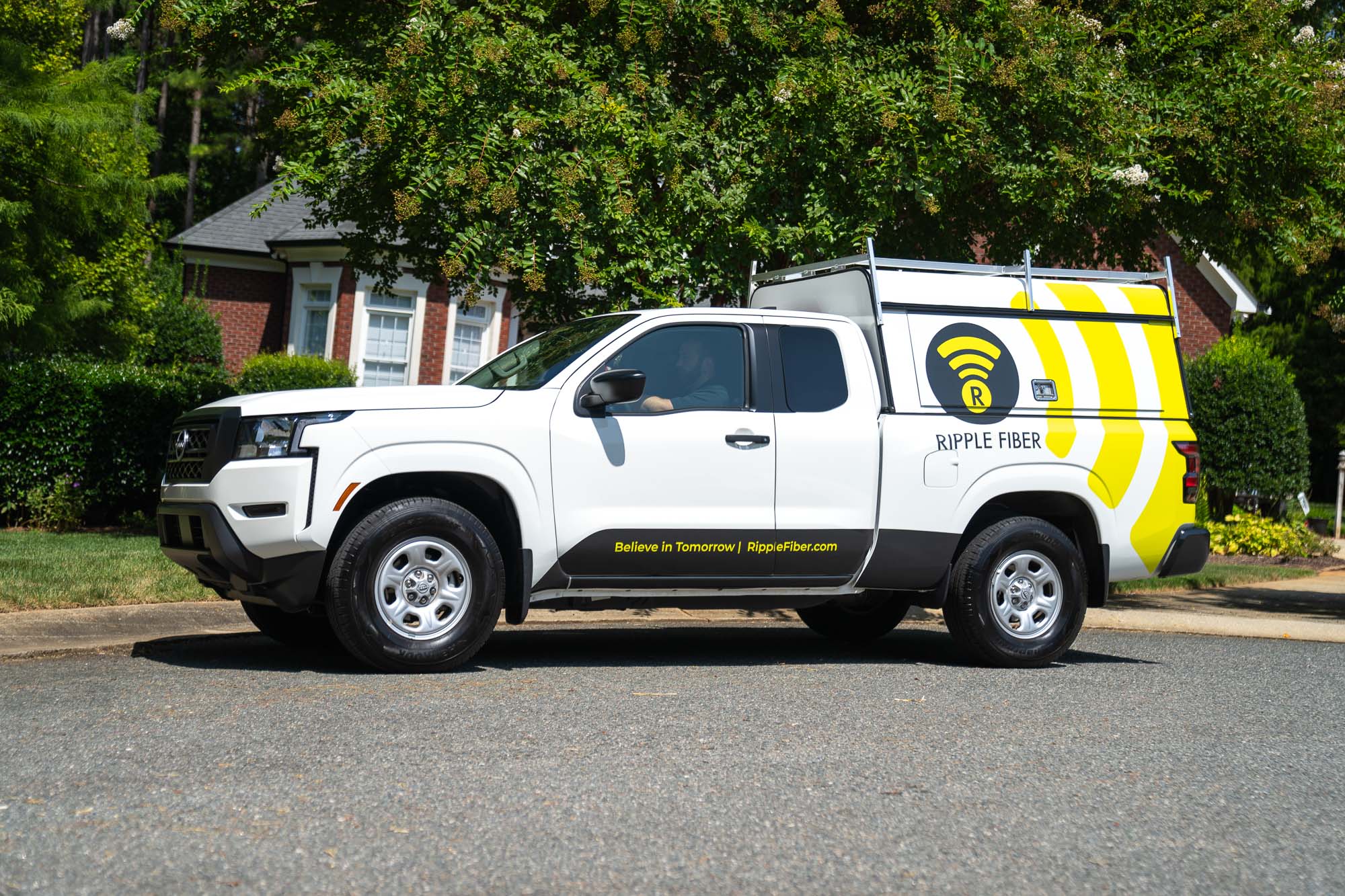
North Carolina-based ISP Ripple Fiber has been on quite the growth journey over the past 12 months, expanding its multi-gig network into Illinois, Washington, Arizona, Florida, Colorado and Arkansas, with future plans to build in California. Homes passed grew 68% to more than 300,000, while subscribers grew 74%, marking the most aggressive expansion in company history. Founded in 2021 by CEO Greg Wilson, a 25-year veteran who began his telecom career in his native South Africa, Ripple Fiber has deployed more than 3,500 miles of fiber across 10 states and nearly 300 municipalities. That progress is the result of a clear focus.
“We’re focusing on communities around the bigger cities. So feeder towns where a lot of people are probably still economically tied to the larger metro but haven’t yet got fiber,” Wilson explains. “These are typically pretty small municipalities and their challenges are being able to deal with a construction project the size of what we bring into town. In order to not overload these cities, what we do is we spread that load and that’s why we’re fairly wide in a number of states and municipalities.”
The typical town the fiber provider is building in can only accommodate 500-1,000 passings per month. “When we realized that, then it was really a backward calculation of how many homes a month do we want to be rolling out? How many states and cities do we need to be building in? How big do we want to get in each state to make sure that it’s viable from an operational and profitability perspective?” Wilson says. “We picked the states that had the best runway for us. It’s quite a long process and it’s taken a lot of planning and a lot of backing and faith from our funders and shareholders to get to this point.”
Supporting that process is a proprietary machine learning platform that the ISP leverages to identify expansion opportunities. Developed in-house at Ripple Labs, the platform (it doesn’t have a name yet, we asked!) is at the center of the ISP’s data-driven approach to calculating competitor density, developing the business plan, deploying capital and predicting costs in a new market.
M&A is the other piece of the expansion puzzle. In 2025, Ripple Fiber merged with sister business HyperFiber, which added Florida, Colorado and Arkansas markets to the footprint. The same group of shareholders funded both ISPs from the beginning and “that was really about making sure that we’ve got multiple teams focused on multiple areas of the country,” Wilson says. “Once those build engines were established, then it made sense to bring them back together to gain operational efficiency.”
Ripple also acquired BridgeNET Fiber last year to strengthen its position in North Carolina, particularly in the community of Statesville, where BridgeNET has 3,000 passings. This deal was about making sure Ripple could build a complete market. “Sometimes you go into a market that’s already been built out 30-40% by a company. It doesn’t make sense for us to come in and build the other 60%. So, we find these companies, as long as they’re a clean fiber company and they’re not doing other sorts of mixtures of products and services. We’re happy to look at acquiring them, keeping the team on board because generally they know the local market really well and using them to continue building out that market and those adjacent to their town. What that does is it gives us an efficient build engine, and then it gives us complete coverage over those jurisdictions,” Wilson explains.
The company’s biggest deal of all came in July, when Ripple agreed to be acquired by Eaton Fiber, a wholesale fiber-to-the-home network provider backed by Tillman Global Holdings. Eaton—which secured a $1.5 billion investment from Tillman and Bain Capital to fund the deal and its broader buildout—has a commercial partnership with Verizon in which Eaton funds and builds the network while Verizon serves as the exclusive retail provider. As part of the Ripple transaction, Verizon will take on Ripple’s existing customers along with a small slice of Ripple’s network in the Carolinas that overlaps with Verizon’s own footprint; the rest of Ripple’s operations become part of the Eaton Fiber platform.
“It’s a very capital-intensive business with a long return on investment. The more certainty investors can have behind revenue streams, the more appetite they’ve got to put funding in the business. This is exactly what this deal does for us,” Wilson says. “What it does for Verizon is it gives them a build engine that knows how to go and deal with these smaller communities, the local issues and build out.”
Because Ripple built its network as an open access platform, plugging in Verizon will be a straightforward process. Wilson sees plenty of other positives. “It’ll be good for customers because it’ll still be Ripple delivering the underlying service, managing the network, building out the network to our level of quality. And then you’ve got all of Verizon’s offerings around mobile bundling, all of those types of product offerings which are really rich for consumers.”
Underscoring that focus on the consumer is Ripple’s refreshed customer-friendly packaging, with five residential tiers ranging from 650 Mbps to 8 Gigs at new lower pricing, starting at $40/month. Gig packages include eero WiFi 7 equipment and cellular backup at no additional cost.
“The pricing’s been great for us,” Wilson says. “We’ve been able to maintain ARPU and increase our penetration. We had some markets that needed more competitive price points. Some of it was because of affordability in the areas that we’re in and some of it was because the competitors were being more aggressive in the area.”
In other words, the Ripple Fiber team is keeping very busy, but Wilson still took a moment to look back at the last five years: “Launching a fresh brand with a really coherent product offering, and being able to roll that out at the speed that we do is probably the biggest milestone. But how do you offer consistency of service? It’s really down to phenomenal people in the U.S. There’s a massive talent pool that are super hard workers, super intelligent, so we were able to build a great team really quickly, and everybody bought into our mission and what we want to do.”